
Four Functions of Management Explained Simply:
Every manager, whether running a coffee shop or a Fortune 500 company, performs the same four core activities. This article on the four functions of management explained breaks each one down with clear definitions and practical examples so you can apply them confidently in exams and real projects.
By the end, you’ll be able to identify which function is at play in any workplace scenario — a skill examiners love to test.
What Are the Four Functions of Management?
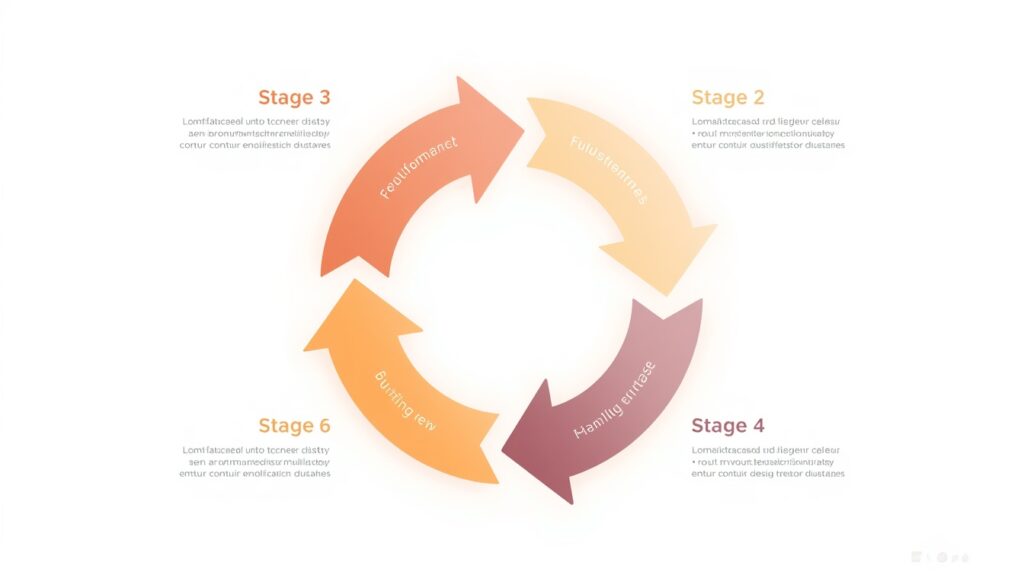
The four functions of management — planning, organizing, leading, and controlling — were popularized by management scholars as a simple framework describing what managers actually do all day. Together, they form a continuous cycle rather than a one-time checklist.
1. Planning
Planning means setting goals and deciding the best way to achieve them. It answers the question: “Where do we want to go, and how do we get there?”
Example: A UCP student club planning next semester’s events starts by setting a goal (host 5 events), then outlining a budget and timeline.
2. Organizing
Organizing means arranging resources — people, money, materials — to carry out the plan. This includes creating a structure, assigning roles, and delegating tasks.
Example: After planning the events, the club assigns one member to logistics, another to marketing, and another to finance.
3. Leading
Leading involves motivating, guiding, and communicating with people so they perform at their best. This function is about influence, not just instruction.
Example: The club president holds a kickoff meeting to inspire the team and clarify expectations, boosting morale before the busy semester begins.
4. Controlling
Controlling means monitoring performance, comparing it against the plan, and correcting course when needed.
Example: Midway through the semester, the club reviews attendance numbers and budget spending, then adjusts marketing efforts for the next event.
Why Understanding the Four Functions of Management Matters
This topic is part of the FOM curriculum at UCP, and it’s one of the most frequently tested concepts because it connects theory to real-world managerial behavior. Almost every case study question can be broken down using this four-part lens.
How the Four Functions Work Together
These functions aren’t isolated steps — they form a loop:
- Plan the goal.
- Organize the resources.
- Lead the people executing the plan.
- Control by checking results and adjusting the plan.
If controlling reveals a problem, managers loop back to planning, making the cycle continuous rather than linear.
Common Exam Mistakes to Avoid
- Confusing “organizing” (structuring resources) with “controlling” (monitoring results) — they are often mixed up.
- Forgetting that leading is about people, not tasks.
- Writing generic definitions without a supporting example — always pair a function with a real scenario.
A Worked Example: Applying All Four Functions
Consider a small UCP-based startup team launching a mobile app:
- Planning: Deciding to launch by December with a defined feature list.
- Organizing: Splitting the team into developers, designers, and marketers.
- Leading: The founder holds weekly check-ins to keep morale high.
- Controlling: Tracking bug reports and user feedback to adjust the roadmap.
This kind of structured breakdown is exactly what strengthens exam and assignment answers.
Related reading: Principles of Management Notes for Students, Planning Organizing Leading Controlling Examples, Types of Managers Explained
Frequently Asked Questions
What are the four functions of management explained in simple terms?
They are planning (setting goals), organizing (arranging resources), leading (motivating people), and controlling (monitoring results) — the four core activities every manager performs.
Who introduced the four functions of management?
The framework evolved from early management theorists, including Henri Fayol, and was later simplified into the widely-taught four-function model.
Is controlling the same as micromanaging?
No. Controlling means tracking progress against goals and adjusting plans — it doesn’t require watching every small task, which is what micromanaging does.
Can the four functions apply to student projects?
Yes. Any group project — from a class presentation to a business plan — can be organized using these same four functions for better teamwork.
Which function usually comes first?
Planning almost always comes first, since it sets the goals that organizing, leading, and controlling are built around.
Keep Learning
Struggling to connect theory with real examples? Upload your own FOM notes or assignments to help fellow students, or browse more FOM guides on brainydock.site.