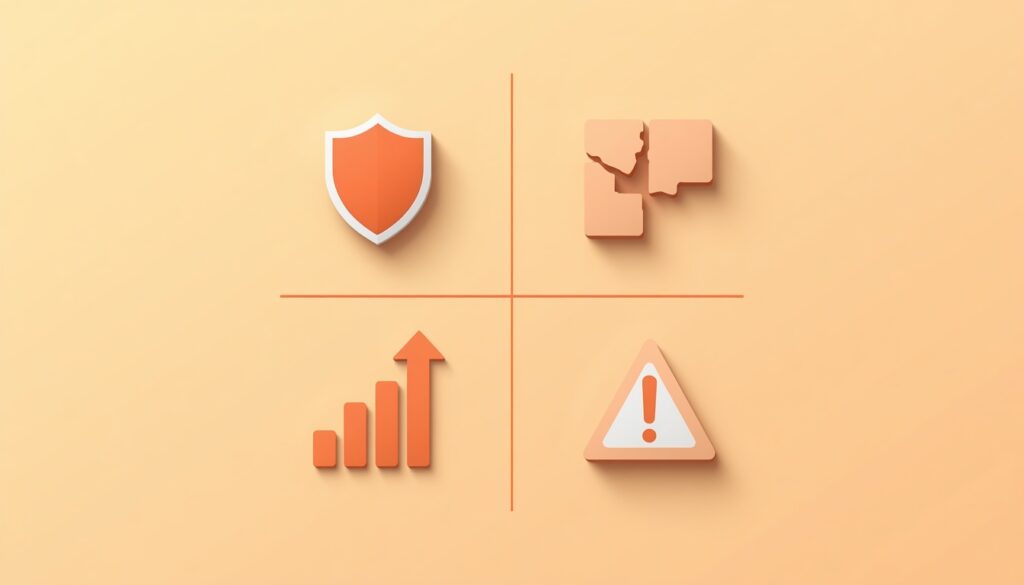
SWOT Analysis Example:
A SWOT analysis is one of the most practical tools you’ll learn in a management course, and it shows up constantly in business plans, case studies, and job interviews. This SWOT analysis example for students walks through the framework step by step, using a relatable business scenario so the concept sticks.
By the end of this article, you’ll be able to build your own SWOT analysis for any company, product, or even a personal career decision.
What Is a SWOT Analysis?
SWOT stands for Strengths, Weaknesses, Opportunities, and Threats. It’s a simple framework used to evaluate an organization’s internal capabilities and external environment before making strategic decisions.
- Strengths and Weaknesses are internal factors — things the organization controls.
- Opportunities and Threats are external factors — things happening in the market or environment.
This topic is part of the FOM curriculum at UCP, often introduced alongside strategic planning and business environment analysis.
Step 1: Identify Strengths
Strengths are what the organization does well compared to competitors.
Example (a local bakery): Strong brand loyalty, a prime location near a university, and a unique signature product.
Step 2: Identify Weaknesses
Weaknesses are internal limitations that hold the business back.
Example: Limited seating capacity, high staff turnover, and no online ordering system.
Step 3: Identify Opportunities
Opportunities are external trends or conditions the business could take advantage of.
Example: Rising demand for food delivery apps, and a nearby office complex opening soon with potential new customers.

Step 4: Identify Threats
Threats are external risks that could hurt the business.
Example: A new competitor bakery opening across the street, and rising flour prices due to inflation.
Putting It All Together: A Full SWOT Table
| Strengths | Weaknesses |
|---|---|
| Loyal customers | Limited seating |
| Great location | No online ordering |
| Signature product | High staff turnover |
| Opportunities | Threats |
|---|---|
| Delivery app demand | New competitor nearby |
| New office complex | Rising ingredient costs |
How to Use a SWOT Analysis in Strategy
Once the four boxes are filled, the real value comes from connecting them:
- Use strengths to capture opportunities (e.g., promote the signature product through a delivery app).
- Use strengths to defend against threats (e.g., loyal customers help resist a new competitor).
- Address weaknesses before they turn into vulnerabilities (e.g., building an online ordering system).
Common Mistakes Students Make
- Listing generic points (“good staff”) instead of specific, evidence-based ones.
- Confusing internal and external factors — a competitor is a threat, not a weakness.
- Stopping at the four boxes without drawing strategic conclusions from them.
A Mini Exercise
Try building a SWOT analysis for your own university society or a business idea you’re considering. Even a rough attempt builds the analytical thinking examiners look for in case-study answers.
Related reading: Business Environment Factors Explained, Management Case Study Examples for Students, Decision Making Process in Management
Frequently Asked Questions
What is a simple SWOT analysis example for students?
A local bakery evaluating its loyal customer base (strength), limited seating (weakness), delivery app demand (opportunity), and a new nearby competitor (threat) is a straightforward, relatable example.
What is the difference between strengths and opportunities?
Strengths are internal advantages the organization already has, while opportunities are external conditions in the market that the organization could take advantage of.
Is SWOT analysis only used for businesses?
No, SWOT analysis can be applied to personal career planning, university societies, or even individual projects.
How detailed should a SWOT analysis be for an assignment?
Aim for at least 3–4 specific points per category, supported by reasoning rather than vague statements.
What comes after completing a SWOT analysis?
The next step is usually strategy formulation — deciding how to use strengths and opportunities while minimizing weaknesses and threats.
Keep Learning
Want feedback on your own SWOT analysis assignment? Upload your notes to help other students, or browse more FOM guides on brainydock.site.