

Valuable Assignment 3 Professional Communication: Writing Resumes, Styles and Formats
Introduction
A resume is a formal document that highlights a person’s education, skills, experience, and achievements. It is one of the most important tools for job seekers because it creates the first impression on employers. Professional communication requires resumes to be clear, organized, and easy to read.
What is a Resume?
A resume is a summary of a person’s qualifications and professional background. It helps employers determine whether a candidate is suitable for a particular job position.
Importance of a Resume
- Creates a positive first impression.
- Highlights skills and qualifications.
- Helps employers evaluate candidates quickly.
- Increases the chances of getting an interview.
- Demonstrates professionalism and communication skills.
Resume Styles
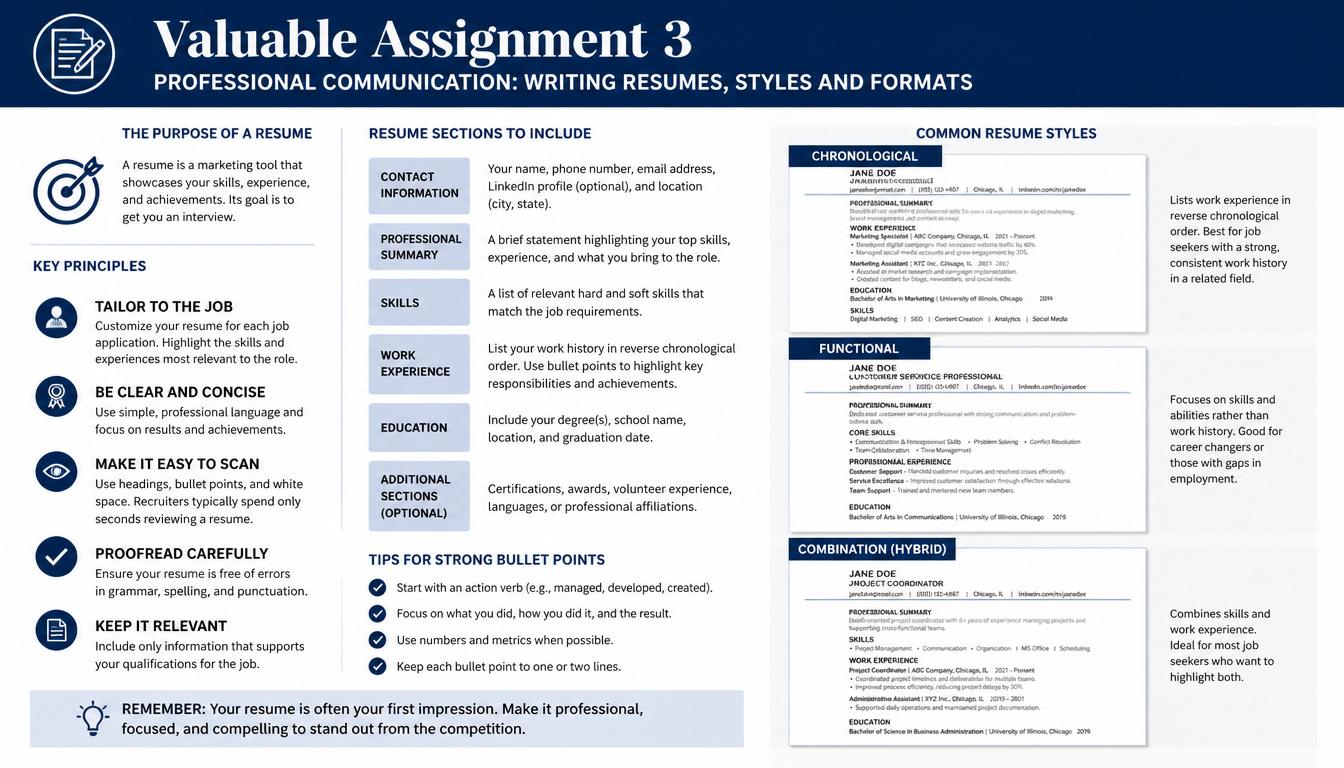
There are three common resume styles:
1. Chronological Resume
- Lists work experience in reverse chronological order.
- Best for individuals with a strong work history.
- Most commonly used format.
2. Functional Resume
- Focuses on skills and abilities rather than work experience.
- Suitable for fresh graduates or career changers.
3. Combination Resume
- Combines both chronological and functional styles.
- Highlights skills as well as work experience.
Resume Format
A professional resume should include the following sections:
1. Contact Information
- Full Name
- Phone Number
- Email Address
- Address (optional)
2. Career Objective
A short statement describing career goals and the position being applied for.
3. Education
- Degree or qualification
- Institution name
- Year of completion
4. Skills
- Communication Skills
- Computer Skills
- Leadership Skills
- Problem-Solving Skills
5. Work Experience
- Job title
- Company name
- Employment dates
- Key responsibilities
6. Achievements and Certifications
- Awards
- Training programs
- Professional certifications
7. References
References may be included or written as “Available upon request.”
Tips for Writing an Effective Resume
- Keep the resume concise and relevant.
- Use clear headings and simple language.
- Check for grammar and spelling mistakes.
- Use a professional font and layout.
- Tailor the resume according to the job requirements.
Conclusion
A well-written resume is an essential part of professional communication. Choosing the correct style and format helps job seekers present their qualifications effectively. A professional resume increases employment opportunities and demonstrates strong communication skills.